
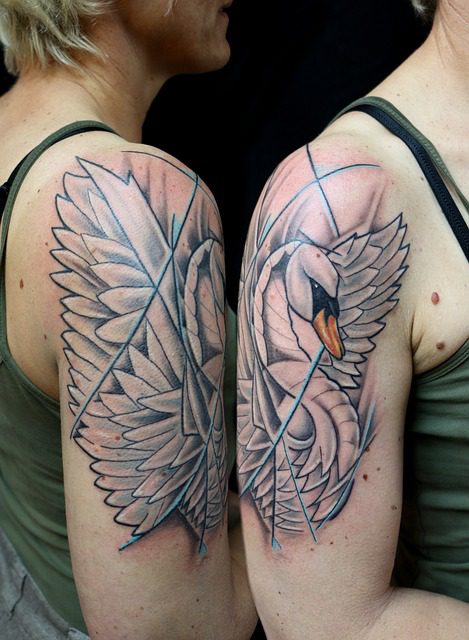
Tattoos are a form of body art through which people can creatively express their personality, style, and beliefs. However, many people wonder whether it is safe to get a tattoo on scarred skin.
Scars are the result of the body’s natural healing process after an injury, and every scar has its own characteristics. In this blog article, we will discuss in detail whether it is possible to tattoo on scars, what factors to consider, and how you can make the best decision for yourself.
What are scars and how do they form?
Scars form when the skin is damaged by injuries, surgeries, or accidents and the body begins to repair the injured tissue. The healing process leads to the formation of collagen, which serves as replacement tissue and closes the gap.
Although collagen closes the wound, scar tissue is generally less elastic and has a different structure than the surrounding skin. Scars can appear in various shapes and sizes, and their characteristics vary from person to person.
What types of scars are there?
-
Hypertrophic scars: These scars are raised and result from excessive collagen production. They usually remain confined to the original wound area.
-
Keloid scars: These scars develop due to excessive growth of scar tissue and can extend beyond the original wound.
-
Atrophic scars: These scars appear as indentations in the skin, often resulting from acne or chickenpox.
Each scar is unique, and these differences play an important role when considering tattooing on a scar.
Can you tattoo on a scar?
In principle, it is possible to tattoo on a scar. However, there are important points to consider before taking this step.
3.1 The healing phase of the scar
Before considering a tattoo, you should make sure the scar is fully healed. This can take anywhere from six months to a year, depending on the type and severity of the scar. Fresh scars are often still sensitive and can change during the healing process. If you get a tattoo on a scar that is not fully healed, there is a risk that the design may change or the skin could be damaged during healing.
3.2 Location of the scar
The scar’s location is also an important factor. Scars in areas that move frequently or are exposed to constant friction—such as elbows, knees, or wrists—may not be ideal for tattooing. Friction in these areas can hinder the healing of the tattoo and potentially cause irregularities in the design. A tattoo on a less stressed skin area can heal better and achieve the desired result.
3.3 Type of scar
Not all types of scars are equally suitable for tattooing. Hypertrophic and keloid scars often have a thicker, firmer structure that can make it harder for tattoo ink to penetrate. Additionally, keloid scars risk growing further or worsening due to tattooing. It is therefore advisable to consult a dermatologist before tattooing to ensure the scar is stable enough.
Atrophic scars, such as those resulting from acne, present a different challenge because the skin in these areas is thinner and more sensitive. An experienced tattoo artist will know how to adjust the design to the scar’s individual characteristics.
What is tattooing on scars?
Tattooing on scars is somewhat different from tattooing on healthy skin. Scar tissue is often thicker, more uneven, and less elastic, which means the tattoo artist must be especially careful to achieve an even result. A skilled tattoo artist will be aware of the peculiarities of scar tissue and apply techniques to ensure the ink is evenly applied and the design stands out well.
It is also important to remember that tattoos on scars may not be as color-intense or sharp as on normal skin. The scar’s texture can cause the tattoo to fade or appear irregular in some places. Nevertheless, a well-planned and professionally executed tattoo can aesthetically camouflage a scar and give you a positive body image.
Does it hurt to tattoo on a scar?
Pain is a subjective experience and varies from person to person. Generally, scar tissue is less sensitive than the surrounding skin because it often contains fewer nerve endings. However, this does not mean tattooing on a scar is painless. Depending on the scar’s size and condition, tattooing on that spot can be more or less painful than on healthy skin.
An experienced tattoo artist will strive to make the tattooing as painless as possible and take breaks if necessary.
Important considerations before making a decision
Before deciding on a tattoo on a scar, there are some important steps to keep in mind:
-
Consult a dermatologist: If your scar is particularly thick, sensitive, or is a keloid, you should definitely see a dermatologist. They can assess whether your scar is stable enough for a tattoo and if there is an increased risk of complications.
-
Choose an experienced tattoo artist: Not every tattoo artist has experience working with scar tissue. Therefore, it is important to select a professional who can prove experience tattooing on scars. An experienced artist will consider your scar’s peculiarities and adjust the design accordingly.
-
Choice of design: Some designs are better suited for tattooing on scars than others. Detailed designs with many fine lines may not show well on uneven skin. Simpler, bolder designs are often the better choice here.
Conclusion
In summary, it is indeed possible to tattoo on a scar. However, it is important to be aware of the scar’s peculiarities and take the necessary precautions. Wait until the scar is fully healed, choose an experienced tattoo artist, and consult a dermatologist to ensure the tattoo is safe and effective. With proper preparation, a tattoo on a scar can not only be an aesthetic enhancement but also an expression of self-confidence and personal strength.
Image by Herco Roelofs on Pixabay