
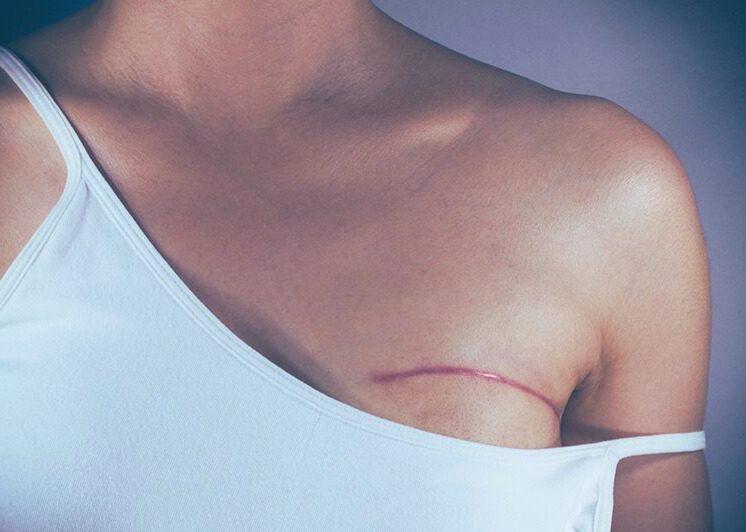
After breast cancer surgery, proper scar care plays a crucial role in both physical and emotional recovery. Scars (Latin: cicatrixes) are fibrous tissue that closes a wound. Compared to normal skin, scar tissue is less elastic and poorly supplied with blood. While scar formation itself cannot be prevented, its final appearance and texture can be significantly improved through targeted care – particularly important after major procedures like mastectomy.
This article highlights the essential criteria for successful scar care following breast cancer surgery and explains why comprehensive treatment is vital for long-term recovery.
1) Restoring Sensation
Loss of sensation in the operated area is common after breast surgery and can affect body perception and self-esteem. Effective scar treatment should aim to promote nerve regeneration and help restore feeling in the affected area. Many patients report noticeable improvements in sensation after just a few sessions, which greatly contributes to overall well-being and quality of life.
2) Effective Pain Relief
Postoperative pain can significantly hinder healing and daily activities. Chronic pain may reduce quality of life and independence. A key element of successful scar care is pain reduction through targeted techniques that relieve tissue tension and discomfort, enabling women to return to everyday life without constant pain.
3) Improving Mobility
Breast cancer surgery can lead to restricted shoulder and arm movement. Proper scar treatment can help release adhesions in the tissue, improving mobility and muscle flexibility. Restored movement supports independence and comfort in daily tasks.
4) Quick and Noticeable Results
Many women expect rapid improvements after surgery to regain their quality of life. Effective scar care that provides visible and tangible results after only a few sessions is highly motivating and supports a positive attitude during recovery.
5) Long-Term Relief
Short-term benefits alone are not enough. Consistent application of the right techniques ensures lasting improvements in comfort, mobility, and appearance, helping patients achieve sustainable relief even years after surgery.
6) Emotional and Psychological Recovery
Beyond physical healing, emotional recovery is equally important. Body changes after breast cancer surgery can lead to distress and reduced self-esteem. Successful scar care helps women reconnect with their bodies, regain confidence, and foster holistic healing.
Conclusion: Uli’s Proven Yet Underrecognized Scar Care Method
Optimal scar care after breast cancer surgery should meet several criteria: restoring sensation, reducing pain, improving mobility, achieving quick results, providing long-term benefits, and supporting emotional healing.
Uli Gutbrod’s method offers an effective, holistic approach that meets these needs. Based on years of experience and targeted techniques, his treatment aims to improve both physical and emotional well-being.
For more information on this comprehensive approach, visit www.narbenpflege.net.
Relevant Studies:
-
Commander SJ et al. Update on Postsurgical Scar Management. Semin Plast Surg. 2016 Aug;30(3):122–128.
-
Serra-Añó P et al. Effectiveness of Myofascial Release After Breast Cancer Surgery. Support Care Cancer. 2019;27:2633–2641.
-
Scott HC et al. Is Massage Effective in Postoperative Scar Management? J Hand Ther. 2022;35(2):186–199.
-
Bueno A et al. Treatment and Improvement of Healing After Surgical Intervention. Healthcare (Basel). 2023;11(15):2213.
-
Mascharak S et al. Preventing Engrailed-1 Activation in Fibroblasts Yields Wound Regeneration Without Scarring. Science. 2021;372(6540).