
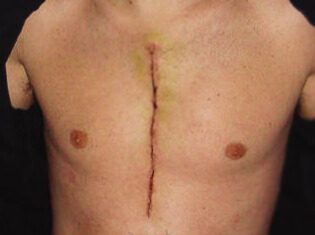
Open-heart surgery is often unavoidable to treat life-threatening heart conditions. However, these procedures frequently leave visible scars that can affect not only appearance but also cause pain, sensitivity issues, and limited mobility. In this article, you’ll learn about the four most common types of scars after heart surgery, their healing time, and how to care for them effectively.
What Happens During Open-Heart Surgery?
In heart surgery, the chest is opened to give surgeons access to the heart. The resulting scars depend on the type of incision and procedure performed. The most common are midline scars created when the sternum is opened, though smaller scars can also occur with minimally invasive techniques.
Proper scar care plays a crucial role in improving both appearance and skin function while relieving discomfort such as pain or tightness.
The 4 Most Common Scar Types After Heart Surgery and Their Healing Times
Midline Scar
The midline scar is the most common scar after open-heart surgery. It runs vertically down the chest and is formed when the sternum is opened.
-
Healing time: Outer wound healing takes about 6–12 weeks, while complete sternum healing can take up to a year.
-
Care tips:
-
Gently clean the scar daily with mild soap.
-
Use silicone gels or sheets to improve scar appearance.
-
Pat the scar dry—avoid rubbing.
-
Drainage Scars
During surgery, drainage tubes are placed to remove excess blood and fluid. These leave small scars below the chest.
-
Healing time: Usually 4–8 weeks.
-
Care tips:
-
Keep the wound clean and avoid excessive movement.
-
Apply special scar creams to improve skin texture.
-
Consult a doctor if you notice redness or swelling.
-
Mini-Incision Scars
Minimally invasive heart surgeries leave smaller scars between the ribs. They are less noticeable but can still cause discomfort.
-
Healing time: Typically 3–6 weeks.
-
Care tips:
-
Wear loose clothing to prevent friction.
-
Avoid direct sun exposure to prevent pigmentation changes.
-
Gentle scar massage can promote blood circulation and healing.
-
Delayed Healing and Hypertrophic Scars
In some cases—such as in people with diabetes or a tendency to form excessive scar tissue—healing may be delayed. These scars are often thick, raised, and can cause tightness or itching.
-
Healing time: Several months.
-
Care tips:
-
Use compression bandages or silicone products to control scar formation.
-
Watch for signs of infection and consult a doctor if needed.
-
Laser therapy may help improve the appearance of hypertrophic scars.
-
Scar Care After Heart Surgery: Tips for Faster Healing
-
Gentle cleansing: Wash the scar daily with mild soap and water, then pat it dry to avoid irritation.
-
Silicone products: Use silicone gels or sheets to keep the scar soft and reduce tension while improving its appearance.
-
Regular movement: Move gently and regularly without straining the scar. This promotes blood circulation and speeds up healing.
-
Pain relief: If you experience tightness or pain, a low-temperature heating pad for 20 minutes several times a day can help relax the tissue.
Frequently Asked Questions About Scar Care After Heart Surgery
Should I apply cream to my scar after heart surgery?
Yes, it is recommended to regularly use silicone gel or specialized scar creams to support healing and improve the scar’s appearance.
Will the scar from heart surgery disappear completely?
No, the scar will become less visible over time but will not disappear entirely. With proper care, however, you can greatly improve how it looks.
How long does it take for a heart surgery scar to fully heal?
The outer wound usually heals within 6–12 weeks, but full healing of the sternum and scar can take up to a year.
Can I expose my scar to the sun after heart surgery?
Direct sun exposure should be avoided in the first few months after surgery to prevent pigmentation changes.
Uli’s Scar Care: Effective Results for Heart Surgery Patients
As an experienced medical fitness coach, Uli has achieved remarkable results with his scar care methods. His techniques improve both the appearance of scars and reduce pain and tension following heart surgery.
For more information on Uli’s Scar Care and personalized treatment plans, visit narbenpflege.net.
Conclusion
Scars after heart surgery require specialized care to heal properly and minimize issues such as pain or sensitivity. Healing time varies depending on the type of scar, but with the right care, you can greatly support the recovery process. Uli’s Scar Care offers targeted solutions to improve scar appearance and relieve discomfort.