
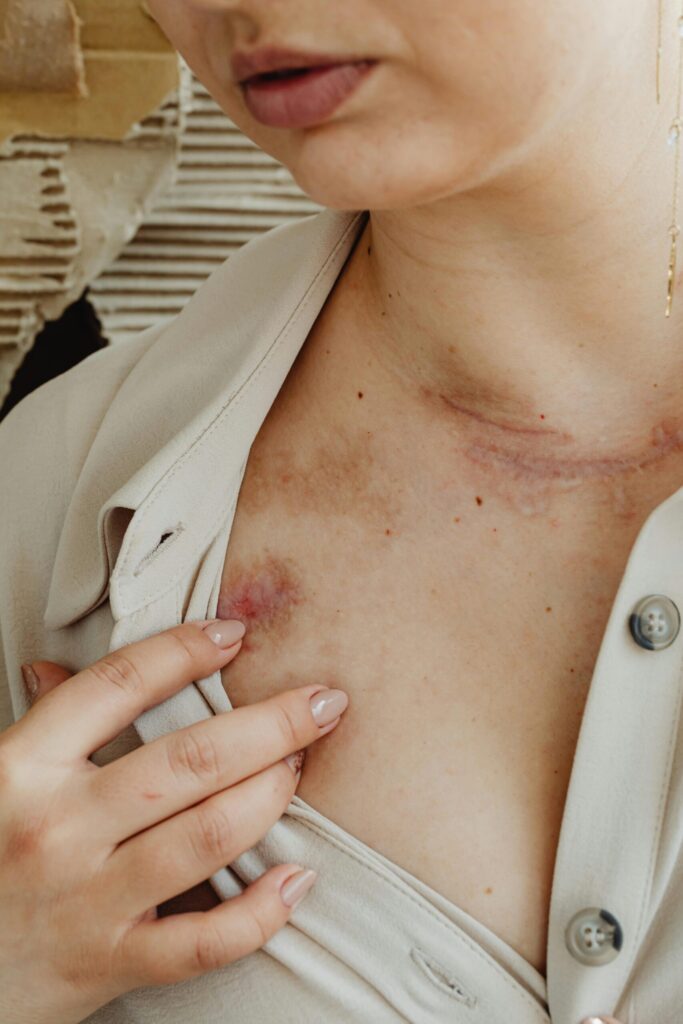
Scars are memories on our skin – sometimes from injuries, surgeries, or serious illnesses. But they are not always just silent witnesses of past experiences. For many people, they are also a source of ongoing discomfort. Pain, tightness, or limited movement can significantly affect daily life and reduce quality of life. In this article, I will explain why scar pain occurs, what treatments are available, and how you can prevent it.
What exactly is scar tissue?
Scar tissue forms when the body heals a wound. The body produces collagen, a protein that replaces the damaged tissue. Unlike normal skin, where collagen fibers grow in various directions, in scar tissue collagen is arranged in only one direction. This special structure makes scar tissue firm and stiff, which is often perceived as uncomfortable.
Scar tissue is less elastic than normal skin. This can lead to a tight feeling, which is often painful. It is important to know that these pains do not only occur on the skin surface but can also affect deeper tissue layers and even internal organs. In cases of larger or deeper injuries, such as after surgery, scar tissue can also develop inside the body and cause discomfort.
How do scars cause pain?
Tissue tension
One of the most common causes of scar pain is the tension caused by stiff tissue. When scar tissue contracts, it can tighten the surrounding skin and underlying tissue. This can be unpleasant and often creates a feeling of pressure, especially during movement or strain.
Nerve damage
A scar can also cause pain if nerves were affected during the original injury or surgery. These nerve injuries can make the scar sensitive, even when the external wounds have long since healed. It is not unusual for scars to be numb or to cause burning sensations.
Fibrosis and adhesions
Sometimes the body produces too much scar tissue. This is called fibrosis. This excessive tissue formation can lead to adhesions, which in turn cause pain and inflammation. Adhesions can also limit movement, especially if they occur near joints or organs.
What other reasons can cause scar pain?
Sometimes scars are just uncomfortable, itchy, or tingly. Other scars are completely unnoticeable. The exact reasons for these differences are still not fully understood. Here are some possible causes for scar pain:
-
Allergies: This can happen when the scar comes into contact with certain products, such as makeup, which can cause skin irritation or redness.
-
Inflammations: Fresh scars, especially after surgery, can be painful during the first few weeks because the tissue is still inflamed. If inflammation worsens, see a doctor.
-
Foreign bodies: Objects like surgical threads or other materials left in the tissue can cause pain until removed. Symptoms should disappear after removal.
-
Changes caused by tension or pressure on the scar can also cause pain.
-
Scar hernia: After abdominal surgeries, a scar hernia can develop months or years later, causing pain during coughing or bowel movements.
-
Nerve damage: Damaged nerve endings in the scar can cause numbness, itching, or other sensations.
-
Weather changes can also affect scars, leading to itching, stabbing, or pulling sensations in sensitive scars.
Why do some scar pains only appear years after surgery?
It is surprising, but scar pain can also occur years after the original injury or surgery. This is often because scars heal slowly. Until a scar is fully matured, it goes through several phases. This process can take a year or longer. During this time, the scar can change — it might grow, harden, or become more sensitive. These slow changes can cause pain to appear only after a long time.
What can you do at home to relieve scar pain?
There are many ways to relieve scar pain and support healing at home. These methods require patience and regular application but can already do a lot of good.
Scar massage
One of the simplest and most effective methods to relieve scar pain is regular massage of the scar. You can massage the scar at least twice daily for about 10 minutes along the direction of the scar. This reduces sensitivity and promotes blood flow, making the tissue softer and more flexible. If the scar is in a hard-to-reach place, a massage therapist can be very helpful.
Moisturizing care
Applying moisturizing creams such as cocoa butter or shea butter helps keep the skin soft and reduces tightness. Silicone gel is also a proven method to promote scar healing. For best results, apply the gel daily for three to six months.
Movement and exercise
Movement and exercise can help reduce stiffness caused by scar tissue. It is best to consult a physical therapist who can show you the best exercises for your situation. We can then discuss these exercises together and tailor them to your scar.
Vibration therapy is also a good way to reduce pain. Using a vibrating device, such as a massage tool, for a few minutes daily can help desensitize nerves and reduce pain. However, this method requires some patience to see results.
Home remedies for scar pain
In addition to the methods mentioned, some home remedies can also help relieve scar pain:
-
Oil application: Calendula oil, olive oil, or wheat germ oil make the skin supple and can reduce tension pain.
-
Aloe Vera: This plant has anti-inflammatory properties and provides moisture to the skin, softening the scar and reducing irritation.
-
Onion extract: Can be applied as a gel or compress on the scar due to its anti-inflammatory ingredients.
Make sure the scar area is not subjected to tension or pressure. Avoid tight or scratchy clothing on the scar.
If home remedies are not effective, other treatment options exist. The appropriate treatment depends on the scar’s location, age, and symptoms.
When should you see a doctor for scar pain?
If you regularly suffer from scar pain or notice that the symptoms become more frequent or intense, you should definitely consult a doctor. A dermatologist is the right specialist in such cases. An experienced dermatologist can determine the exact problem and recommend suitable treatments.
What happens during a medical examination for scar pain?
First, the doctor will talk with you to learn more about your medical history. In this anamnesis, they will ask how long the scar pain has been present, when it occurs, and what type of pain it is.
Next, the doctor will examine the scar, feeling for any raised areas, signs of inflammation, or hardness. This helps to find the cause of the symptoms. If a scar hernia is suspected, further examinations such as ultrasound, MRI, or CT scans may be performed to establish a precise diagnosis and find the best treatment. The correct treatment depends on the scar’s location, age, and symptoms.
How can scar pain be prevented?
The best way to avoid scar pain is to care for your scar properly from the start. Keep the scar clean to prevent infections. Moisturize it regularly to keep the tissue supple. Avoid direct sunlight and wear loose clothing to prevent friction and pressure on the scar.
Conclusion
Scars are more than just aesthetic changes. They can also become a source of ongoing pain and discomfort. Fortunately, there are many ways to relieve these pains and support healing. Whether through massage, moisturizing creams, or modern medical treatments – with the right care and therapy, you can improve your quality of life. If pain persists despite all measures, please see a doctor. Every person is unique, just like their scar. So find the treatment that suits you best.
Photo by Karolina Kaboompics from Pexels:
https://www.pexels.com/de-de/foto/frau-schmerz-hals-brust-7588647/